Why We Build Software Before Finding the Customer
Most studios wait for a client. We build the complete product first — then find the owner who will take it forward. Here is why.
KIING DIGITAL LABS · · 2 min read
The usual order of software is: find a customer, write a spec, then build. It works. It is also not the only order.
At KIING DIGITAL LABS we run it the other way around. We build the complete product first, then find the person or company who will own it.
The loop
Build → Polish → Package → Showcase → Acquire → Repeat.
- Build. A real product with real infrastructure — accounts, database, backend, and where it fits, AI and payments.
- Polish. Interface, copy and edge cases, until it feels finished rather than promising.
- Package. Documentation, a clear list of what is included, and a live deployment.
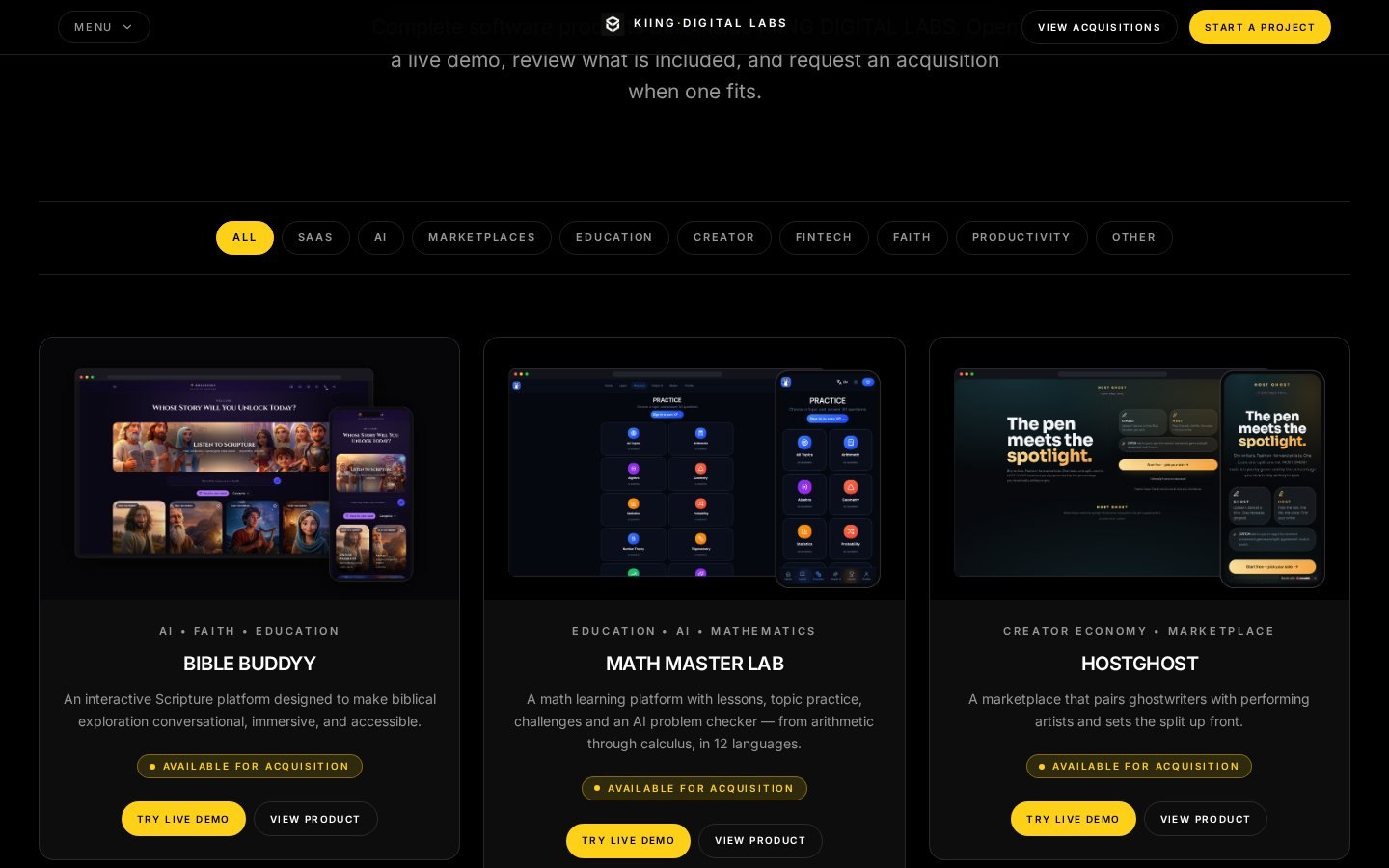
- Showcase. A public page and a live demo anyone can use.
- Acquire. A buyer takes ownership and takes it forward.
- Repeat. Back to the lab for the next one.
Why build first
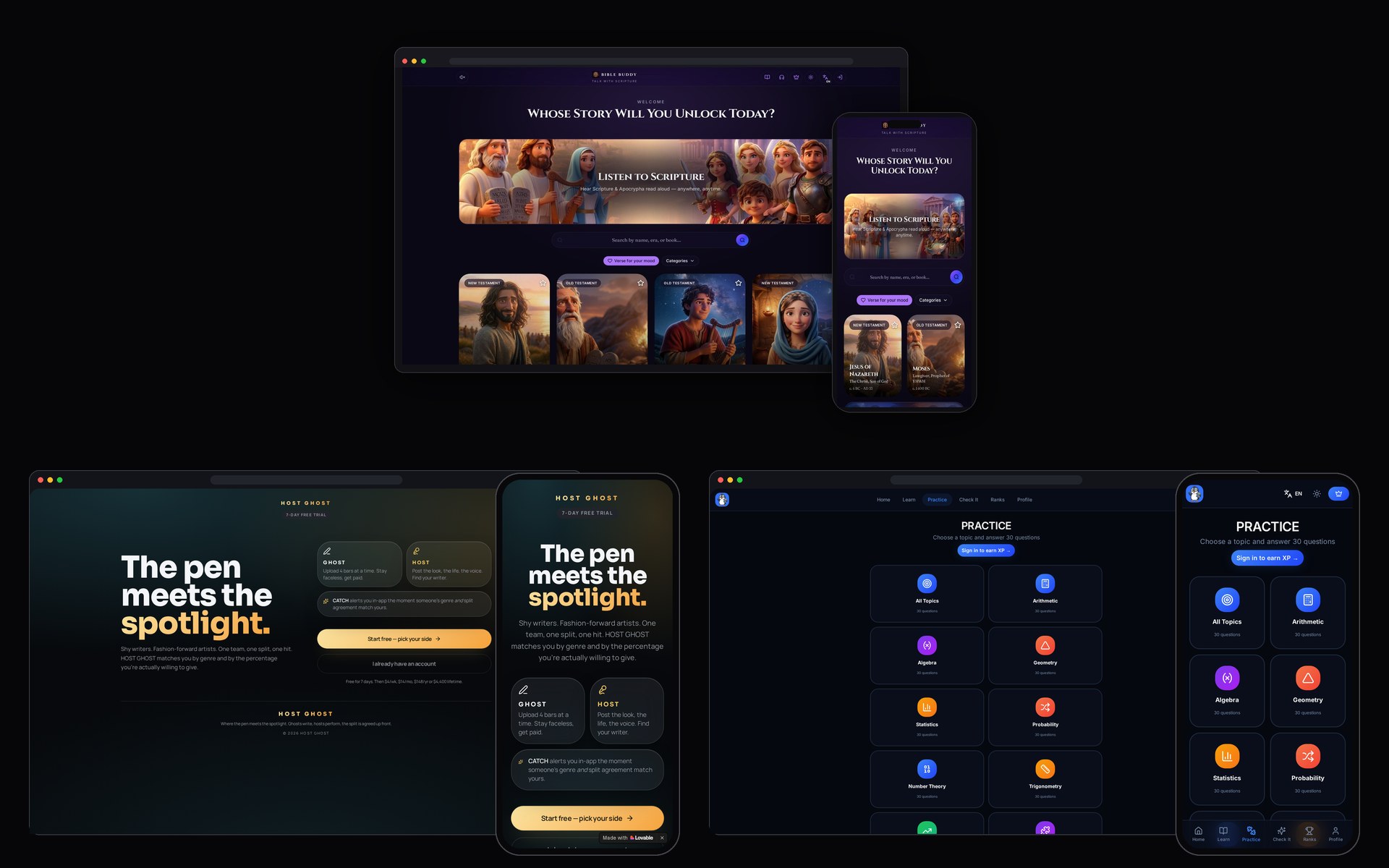
A working product answers questions a pitch cannot. You can open Bible Buddyy, ask it something, and see the answer. You can walk through HostGhost as a Host or a Ghost. That tells you more in five minutes than a deck.
Infrastructure is the slow part. Authentication, data models, payments and deployment take time to get right. When they already exist, a new owner starts at operating and marketing rather than at hiring and scoping.
It lets us specialise. We are builders. Some buyers are operators, marketers or domain experts who know an audience. Acquisition lets each side do what it is good at.
What building first is not
It is not proof of demand. A finished product is not a validated business, and we do not present it as one. Our products are shown with no revenue or users claimed unless those numbers are real.
It is also not the right model for everything. If you have a specific idea and a specific audience, commissioning a build is often the better path — which is why we also offer custom builds.
The point
We would rather show you something that works than describe something that might. Explore the products in the lab.
- PRODUCT DEVELOPMENT
- DIGITAL BUSINESS
- SOFTWARE ACQUISITION